Plumbing
Plumbing Financing for Bad Credit: How Plumbers Keep the Job
By Trevor Hansen· October 6, 2026· 5 min read
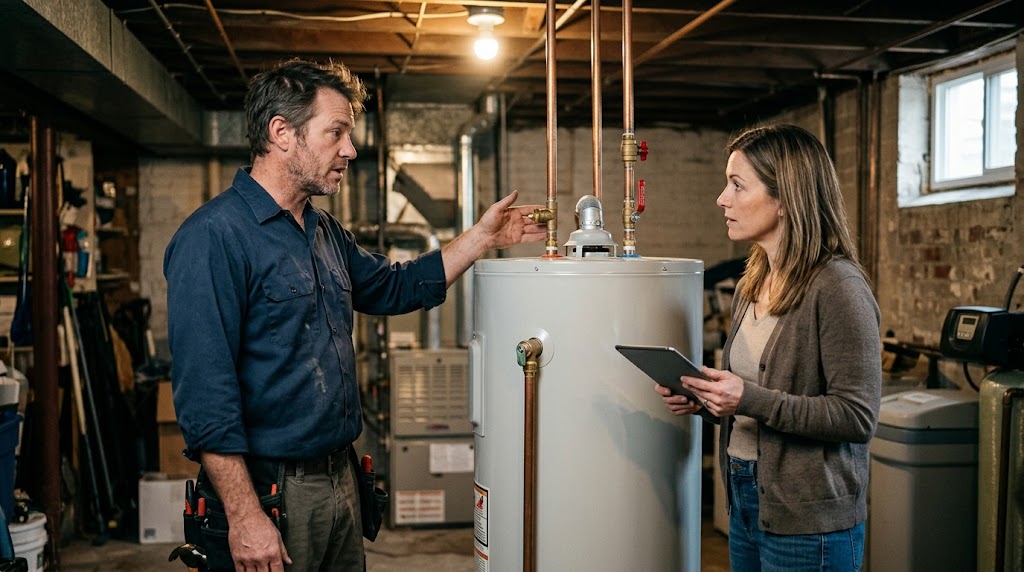
Plumbing emergencies do not check anyone's credit first. A water heater fails the same way in every house, and a frozen pipe bursts whether the homeowner has an 800 score or a thin file. This guide covers plumbing financing for bad credit customers: why declines hurt plumbers more than most trades, and how to keep the job when the first answer is no. For the basics, see our plumbing financing page.
Why plumbing financing for bad credit customers matters
Credit is not easy to get in 2026:
- The New York Fed's Credit Access Survey put the rejection rate for credit applicants at 16.1% in June 2026, while applications hit their highest level since late 2021.
- The New York Fed's Q2 2026 household debt report found 6.97% of credit card balances flowing into serious delinquency.
- The Federal Reserve's 2025 SHED report found 37% of adults could not cover a $400 surprise with cash.
1 in 6
U.S. credit applicants rejected in June 2026
Plumbing customers are drawn from every part of that picture. And many plumbing jobs are not optional.
Why declines hurt plumbers more than most trades
Two things make plumbing declines expensive.
Urgency. A customer with no hot water or water on the floor does not wait a week to "work on their credit." If your one lender says no, they call another plumber or buy the cheapest fix they can find.
Ticket size. ServiceTitan's H2 2025 data found financed plumbing jobs carried a median ticket 75% higher than comparable non-financed jobs, the largest lift of any trade it measured. A lost financed job is a big job lost.
The stakes for the homeowner are real too. State Farm paid an average of more than $30,000 per frozen pipe and water damage claim from January 2024 through June 2025, according to its January 2026 release. A repair delayed because financing fell through can become a much bigger problem.
Why single-lender programs decline customers who would qualify elsewhere
Every lender has its own credit box. Customers inside it get approved; customers outside it are declined, even when another lender would say yes the same day. A single-lender program makes that one box your whole customer base. It is a limit of the program, not a verdict on the customer.
The credit spectrum for plumbing
| Customer | What they need | Program type that fits |
|---|---|---|
| Prime | Protect their savings | True 0% APR or same-as-cash |
| Near-prime | A reasonable monthly payment | Standard installment |
| Subprime or thin file | A yes on the repair or replacement | Extended credit spectrum lenders |
| No traditional credit option, water heater | Hot water now | Lease-to-own, where available |
How second-look financing keeps the job
Second-look financing gives a declined application another lender's review. Some providers sell it as a separate add-on that needs a second application. The cleaner version is a waterfall: the customer applies once, and the application moves through several lenders automatically until one fits. No second form, no awkward pause in the kitchen. Customers can apply together with the tech, or scan a QR code to apply privately on their own phone.
Smaller amounts help. A customer declined for a full repipe may qualify for the section that is leaking now, with the rest planned for later. That is still a job, and a customer who remembers you helped.
Where water heater lease-to-own fits
For water heater replacements, lease-to-own can be the last line of coverage where your provider and state allow it. It is a lease with an option to buy, not a loan, and it usually costs the customer more over time. Present it only after loan programs have had their look, and explain it plainly. Our post on water heater lease-to-own covers when it fits.
What to say when a customer is declined
- Stay neutral. "The application checks several lenders automatically. Here's what came back for you."
- Work with the answer. For a smaller approval: "Here's what you're approved for. Let's look at an option that fits it."
- Protect their dignity. Keep your voice down. Never say "bad credit." Never guess why.
If the approval is smaller than the quote, go back to the options: a standard tank instead of tankless, or the urgent repair now and the rest later. For the full script, see the plumbing financing sales script.
Set it up before anyone applies
- Normalize options early. Mention that you work with more than one lender when you present the quote.
- Start it during the visit. Apply together, or let the customer scan a QR code and apply privately on their own phone. Applications left for later often never happen.
- Offer tiers. Good, better, best options let you fit an approval without losing the job.
- Never pre-judge. Techs who skip financing for customers who "look like" bad credit guess wrong often enough to cost real money.
Phase the job when the approval is smaller
Plumbing lends itself to phasing better than most trades. When an approval comes back below the full quote, look for a safe way to split the work:
- Repipe: replace the failing section or the most exposed runs now, and schedule the rest.
- Sewer line: repair the damaged section now; plan the full replacement for later.
- Water heater: a reliable standard tank now instead of a tankless upgrade.
Be honest about the trade-off. A phased job can cost more in total than doing it all at once, and the remaining work still needs doing. But a customer with a working system today and a clear plan is far better off than one who called someone else. They are also far more likely to hire you for phase two.
Use your maintenance plan to plan ahead
Customers on a maintenance plan give you time to prepare. When an inspection shows an aging water heater or corroded lines, present the replacement with monthly options before it becomes an emergency. A planned replacement leaves room to apply, compare programs and pick a date. That is much easier for customers with thinner credit than a decision made with water on the floor.
Count your declines
Track decline rate by tech and job type. Then do the math: applications per month, times decline rate, times your close rate, times average ticket. Say you see 50 applications a month and 25% are declined. That is 12 or 13 customers. If you would have closed half at a $4,000 average, that is about $25,000 a month in jobs that stopped at the credit screen. The What You're Missing calculator runs your real numbers.
The bottom line on plumbing financing for bad credit
Plumbing emergencies do not wait for better credit, and neither should your close rate. Cover the full credit spectrum, put it behind one application, add water heater lease-to-own where allowed, and train techs to handle a no calmly. To compare providers on coverage, read best plumbing financing programs.
Frequently asked questions
Can customers with bad credit finance plumbing work?
Often, though not always through the first lender. Programs exist across the credit spectrum, and a multi-lender application gives more customers a usable answer. Approval is never guaranteed.
What about a water heater for a customer who can't get credit?
Lease-to-own is available for water heater replacements through some providers, where state rules allow. Present it last, and explain that it is a lease with an option to buy that costs more over time.
What should a tech say when financing is declined?
Stay neutral: 'The application checks several lenders automatically. Here's what came back for you.' If the approval is smaller, offer a phase one that fits. Never mention credit or guess why.
Sources
- New York Fed, SCE Credit Access Survey (2026-07-20)
- New York Fed, Household Debt and Credit Report Q2 2026 (2026-08-11)
- Federal Reserve, SHED 2025 (2026-05-13)
- State Farm, Frozen pipes: beat winter water woes (2026-01-20)
- ServiceTitan, Financing in the Trades (2026)