Roofing
How to Offer Financing for Roofing: A Setup That Closes Jobs
By Trevor Hansen· October 2, 2026· 5 min read
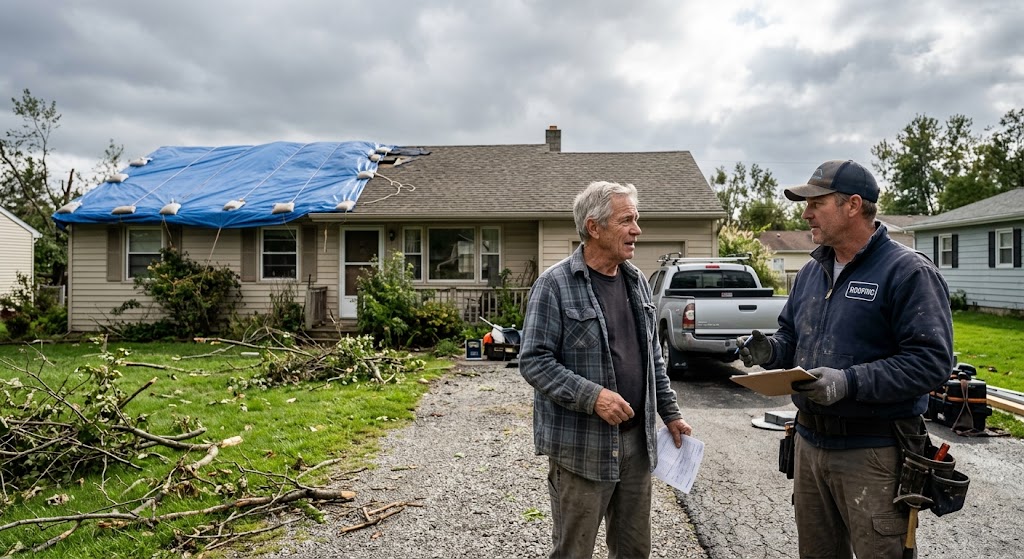
Most roofing companies that "offer financing" have a lender link they text after the inspection. That is not a program, and it rarely closes a roof. If you want to offer financing for roofing in a way that wins jobs, it takes a short setup. Here are the seven steps, in order. For the bigger picture, start with our roofing financing overview.
Why how you offer financing for roofing matters
Roofs are expensive and getting more so. JobNimbus estimates a national average near $14,000 for a new asphalt roof in 2026. Insurance is covering less of it: Matic found average deductibles rose 24.5% from 2024 to 2025, with wind and hail deductibles of 1% to 5% of the home's value spreading.
That means more homeowners face a large out-of-pocket number at the moment you need a signature. How you present financing at that moment decides whether you get the job or the homeowner gets "a few more quotes."
Step 1: Decide what you need financing to do
Roofers usually need financing for one of three jobs:
- Covering the homeowner's share of a claim: the deductible, depreciation on an older roof, and upgrades.
- Closing retail replacements where there is no claim and the homeowner is paying the whole roof.
- Selling the better system: impact-resistant shingles, better underlayment, gutters and ventilation.
Write down which one costs you the most jobs today. That tells you which programs to lead with. A storm-chasing crew in hail country and a retail replacement company in a mild market will answer this very differently, and both answers are right for them.
Step 2: Choose programs for storm and retail work
| Job type | What the homeowner wants | Program that fits |
|---|---|---|
| Insurance claim, small share | Cover the deductible without draining savings | Short true 0% APR or deferred interest |
| Insurance claim, big share | Cover depreciation and upgrades | Standard installment |
| Retail replacement | The lowest monthly payment | Longer-term standard installment |
| Premium materials | Upgrade without a big jump in payment | Extended-term installment |
| Fair or thin credit | A yes | Extended credit spectrum lenders |
A single lender usually handles one or two rows well. The others turn into declines, and on a roof those declines are expensive.
Step 3: Put every program behind one application
Your homeowner should apply once and see what they qualify for. A multi-lender waterfall sends that application to the next lender when the first one says no.
That matters because rejection is common. The New York Fed's Credit Access Survey put the rejection rate for credit applicants at 16.1% in June 2026. On a roofing job, one decline on the homeowner's share can stall the whole claim.
16.1%
of U.S. credit applicants were rejected in June 2026
Step 4: Price financing into your estimates
Financing has a cost, highest on promotional programs. Decide how you handle it before your reps present it.
- Get each program's merchant cost in writing.
- Decide which programs go with which job types.
- Build the expected cost into your pricing, the same way you build in commission and warranty.
Never add a surcharge at the table. See roofing financing dealer fees for the math.
Step 5: Put a monthly option on every estimate
Every estimate should show the total and at least one monthly option, in writing. Use good, better, best tiers for materials, each with a total and a monthly number. The homeowner compares three monthly numbers instead of three large totals, and the better roof stays in the conversation.
On insurance jobs, show the homeowner's share as its own line with a monthly option next to it. "Your part is $6,200, or this monthly option" is easier to say yes to than a single large number.
Step 6: Keep insurance jobs clean
Financing helps homeowners pay their share. It must never make that share disappear. Texas is a clear example: the Department of Insurance says it is illegal for contractors to offer to waive a deductible or rebate any part of it. Penalties reach a $2,000 fine and six months in jail.
Train every rep on one rule: the deductible is paid in full by the homeowner, and financing is one honest way to pay it. Our post on roof financing and insurance deductibles goes deeper.
Step 7: Train the pitch and track the numbers
Most roofing financing fails because the rep sounds unsure, or leaves without starting an application. Train three habits:
- Present options, not credit: "Plenty of homeowners pick one of these monthly options."
- Start the application during the visit. Apply together, or let the homeowner scan a QR code and apply privately on their own phone. If a spouse needs to weigh in, send a text or email invite.
- Stay calm with whatever comes back. One application checks several lenders automatically.
Then track four numbers every month, by rep: share of estimates with a monthly option, share of homeowners who applied, decline rate, and close rate on financed estimates. The decline rate matters most. Use the What You're Missing calculator to put a dollar figure on it.
Get canvassers, estimators and the office on the same page
Roofing sales often pass through several hands: a canvasser or marketer books the inspection, an estimator writes the job, and the office handles the claim and scheduling. Financing breaks when each person tells the homeowner something different.
- Canvassers and call handlers mention once that monthly options exist on every job. No details, no promises.
- Estimators own the presentation and get the application started during the visit, together or by QR code.
- The office tracks every application and follows up on anything pending, especially claim jobs waiting on an adjuster.
Write the handoffs down. When a homeowner hears the same simple message three times, financing feels like a normal part of buying a roof rather than a sign that something is wrong.
Mistakes roofers make when they add financing
- Texting a link after the inspection. The homeowner applies alone, hits a question, and stops.
- Offering it only on retail jobs. Insurance customers often need it most, for the deductible.
- One lender. A single decline ends the conversation on the homeowner's share.
- Long 0% promos on small deductibles. High merchant fee, little benefit. Match the program to the amount.
- Letting each rep improvise. A one-page script fixes this in a week.
What a working setup looks like
After a few months, the difference shows up in the pipeline. Estimates carry monthly options by default. Storm jobs stop stalling on the deductible. Homeowners apply once and see real options instead of a single yes or no. And your sales manager can see all of it in one place, by rep and by job type, which is what makes coaching possible.
For the script your reps will use, read the roofing sales financing pitch. For the full program picture, see roofing financing for contractors.
Frequently asked questions
When should a roofer bring up financing?
With the estimate, alongside the total. On insurance jobs, bring it up when you explain the homeowner's share. Waiting until the customer hesitates makes it sound like a rescue.
Can homeowners finance their insurance deductible?
Many financing programs can cover the homeowner's share of an insurance job, including the deductible. The deductible must still be paid in full; it cannot be waived or rebated.
How long does it take to start offering roofing financing?
Enrollment usually takes days. Pricing your estimates and training your sales team is the part worth taking a week to do well.
Sources
- Matic, 2025 Home Insurance Report (2025)
- New York Fed, SCE Credit Access Survey (2026-07-20)
- JobNimbus, How much does a new roof cost (2026-07-21)
- Texas Department of Insurance, State law cracks down on roof scams (current law)