Roofing
Roofing Financing for Contractors: The 2026 Guide
By Trevor Hansen· October 2, 2026· 5 min read

Roofing used to split neatly into two kinds of jobs: insurance claims, where the carrier paid most of it, and retail replacements, where the homeowner paid cash. In 2026 that line has blurred. Deductibles are bigger, older roofs get less coverage, and roofs cost more. This guide covers how contractors use roofing financing to close more of those jobs, which programs to know, and how to choose a provider.
Why roofing financing for contractors matters more in 2026
Three numbers explain the shift.
- Roofs cost more. JobNimbus puts a new asphalt roof on a typical 2,000 square foot home at $9,000 to $24,000 in 2026, with a national average near $14,000. It estimates asphalt shingle costs are up about 8% to 12% since 2024.
- Insurance covers less of it. Matic's 2025 report found average deductibles rose 24.5% in a single year. Wind and hail deductibles of 1% to 5% of the home's insured value are spreading. On a $400,000 home, a 2% deductible is $8,000.
- Storm losses keep coming. Severe convective storms caused $51 billion in insured losses in 2025, the third straight year above $50 billion, according to Triple-I data reported by Digital Insurance. Hail makes up about 80% of those claims.
+24.5%
rise in the average home insurance deductible from 2024 to 2025
Put those together and the homeowner's share of a roof has grown, on storm jobs and retail jobs alike. The contractor who makes that share easy to pay is the one who gets the signature.
Where the homeowner's share comes from
Most roofing customers now face at least one of these gaps:
- The deductible. Often thousands of dollars, due before or during the job.
- Depreciation on older roofs. Matic notes insurers shifting older roofs to actual cash value, where coverage can drop sharply as the roof ages. The homeowner covers the difference.
- Upgrades. Impact-resistant shingles, better underlayment, gutters, or ventilation the claim does not pay for.
- Retail replacements. No claim at all, just an old roof that needs to go.
Each gap is a point where the job stalls. Financing turns a large lump sum into a monthly option the homeowner can plan around.
What financing does for roofing ticket size
Roofing behaves differently from HVAC here, and the data shows it. ServiceTitan's H2 2025 analysis found financed jobs in specialty trades, a group that includes roofing, had a median ticket 12% higher than comparable non-financed jobs. For HVAC the figure was 66%. ServiceTitan notes these links are correlational.
The lesson for roofers: financing is less about upselling and more about closing. The roof is going to cost what it costs. Financing decides whether the homeowner signs this week or waits for three more quotes.
The program types roofing contractors should know
| Program type | Best for | Watch out for |
|---|---|---|
| True 0% APR promotional | Customers covering a deductible or upgrade who can pay it down in the promo | Usually the highest merchant fee |
| Deferred interest | Customers expecting an insurance check or other funds soon | Retroactive interest if not paid in time |
| Standard installment | Full retail replacements and the lowest monthly number | Longer terms mean more total interest |
| Extended-term installment | Large retail roofs and premium materials | Pricing varies more by applicant |
| Extended credit spectrum | Fair and thin-file credit | Fewer promotional options |
Lease-to-own is generally not a roofing option. Plan your coverage around loan programs.
The biggest leak: declines on the homeowner's share
Credit is still tight. The Federal Reserve's July 2026 loan officer survey reported a modest net share of banks tightening credit card standards. And the Fed's 2025 SHED report found only 63% of adults could cover a $400 surprise expense with cash. A $3,000 deductible is not a small surprise for most households.
When one lender declines a homeowner's financing for the deductible, the whole claim job can stall. A multi-lender waterfall checks several lenders automatically inside the same application, so one lender's no is not the end of the conversation. See roof financing for bad credit for how to present the result.
Stay clean on insurance jobs
Financing helps the homeowner pay their share. It must never be used to make that share disappear. Texas is a clear example. The Department of Insurance says it is illegal for contractors to offer to waive a deductible or rebate any part of it. Penalties reach a $2,000 fine and six months in jail.
The clean approach: the deductible is paid, in full, by the homeowner. Financing is one honest way for them to pay it. Our post on roof financing and insurance deductibles covers the details.
Storm season and retail season need different offers
Roofing demand comes in two shapes, and your financing should fit both.
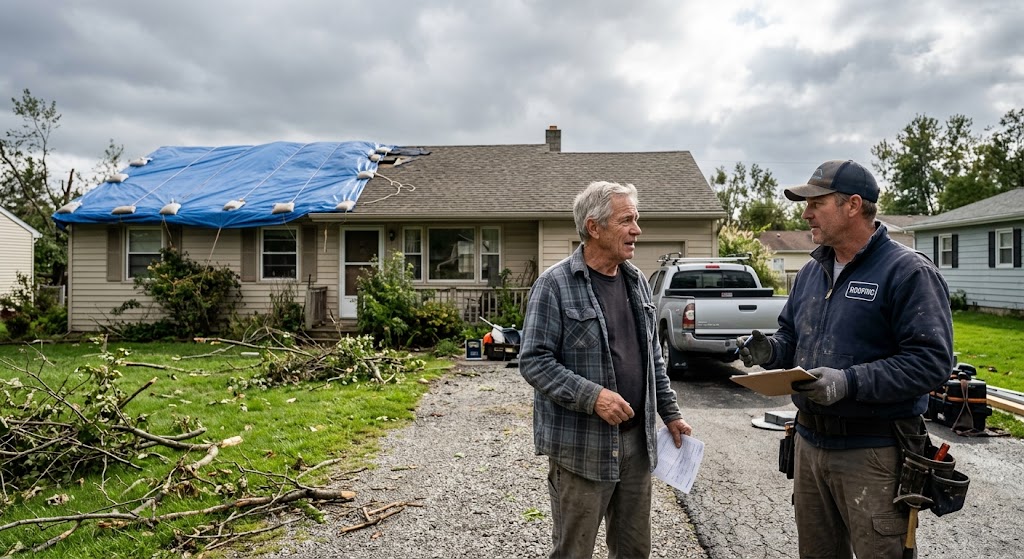
After a storm, volume spikes and speed wins. Homeowners are comparing several contractors knocking on the same street. The job often hinges on the homeowner's share: the deductible, depreciation, and any upgrades. A promotional program that makes that share a small monthly number, decided at the kitchen table, beats a competitor who says "you'll need to pay the deductible up front."
In retail season, the homeowner is usually replacing an aging roof with no claim. The ticket is the whole roof, and the customer has time to shop. Here the lowest monthly payment on a longer standard installment term tends to matter most, alongside a clear good, better, best choice of materials.
Most roofers need both kinds of programs. Knowing which one leads in which season protects your margin. Your team won't offer a long 0% promo, with its high merchant fee, on a job that only needed a small deductible covered.
How to set up a roofing financing program
- Offer it on every estimate, retail and insurance, with a monthly option in writing.
- Cover every credit tier with one application, so a decline moves to the next lender.
- Match funding to your install. Most residential roofs go on in a day or two. Ask exactly what triggers funding.
- Know your program costs and build them into pricing. See roofing financing dealer fees.
- Train the pitch. Present options during the visit and start the application while the conversation is live: together, or by QR code on the homeowner's phone. Use text or email invites and a proposal link for follow-up. Our roofing sales financing pitch has a script.
- Track declines by salesperson and by job type.
How to choose between roofing financing providers
Ask each provider five things. How many lenders see one application? Are 0% offers true 0% or deferred interest? What does each program cost you, in writing? How fast are you funded after install? Does your team see every application in one place? The full comparison is in best roofing financing companies.
Frequently asked questions
Do roofing contractors need to offer financing?
More roofing jobs now leave the homeowner paying a large share out of pocket, through bigger deductibles, depreciation on older roofs, or retail replacements with no claim. Financing gives those customers a way to say yes without waiting.
Can financing be used on an insurance roof job?
Yes. Financing can cover the homeowner's share, such as the deductible or upgrades beyond what the claim pays. It should never be used to hide or waive a deductible, which is illegal in some states.
What does roofing financing cost the contractor?
It depends on the program. Promotional programs such as 0% APR usually carry the highest merchant fee. Standard installment programs usually cost the contractor less.
How should roofers choose a financing provider?
Compare coverage across credit tiers, what happens after a decline, funding timing on a one- or two-day install, the true program types offered, and the cost of each program in writing.
Sources
- JobNimbus, How much does a new roof cost (2026-07-21)
- Matic, 2025 Home Insurance Report (2025)
- Digital Insurance, Severe convective storms caused $51B in 2025 losses (Triple-I) (2026-04-27)
- ServiceTitan, Financing in the Trades (2026)
- Federal Reserve, SHED 2025 (2026-05-13)
- Federal Reserve, Senior Loan Officer Opinion Survey, July 2026 (2026-08-03)
- Texas Department of Insurance, State law cracks down on roof scams (current law)